

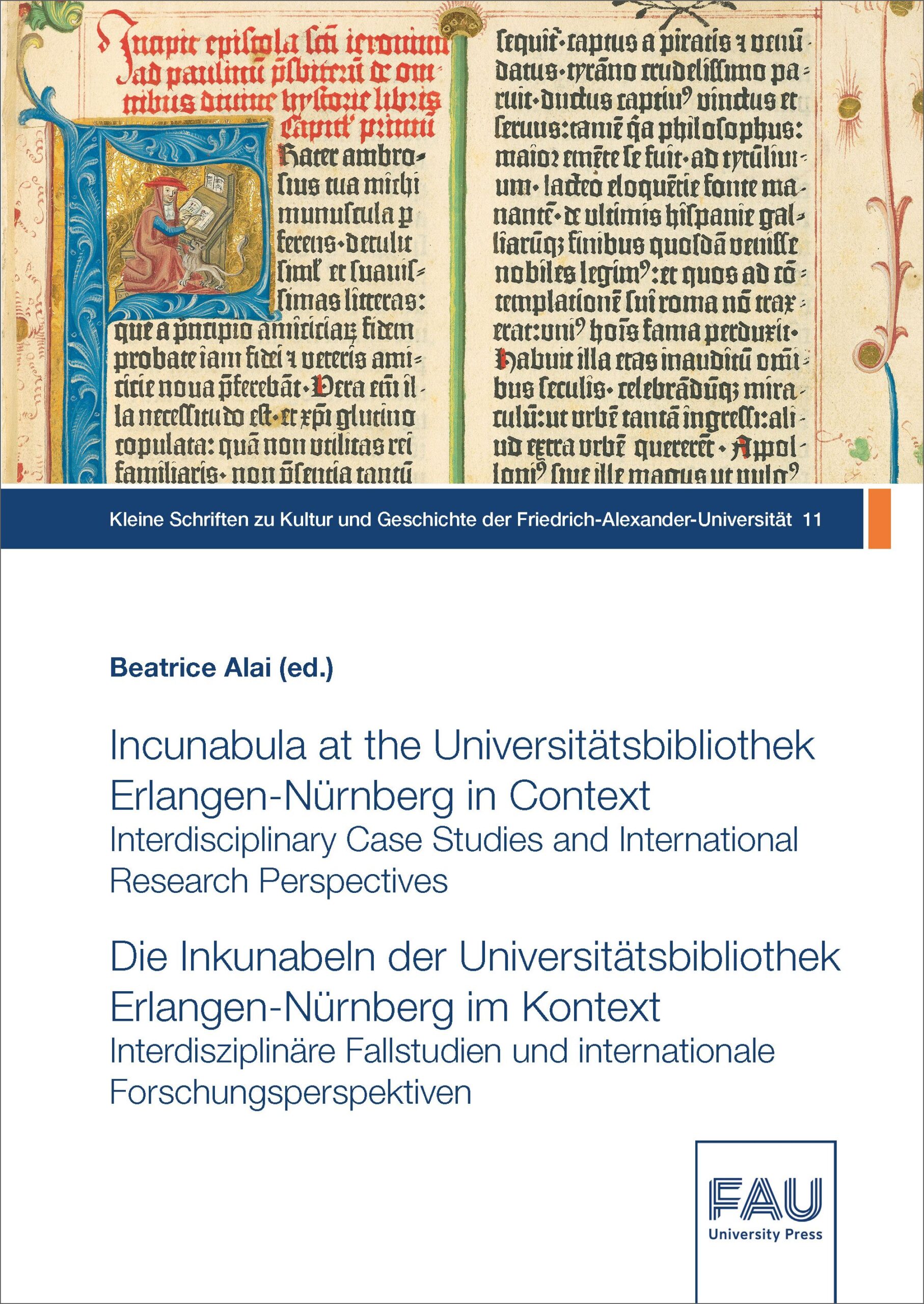



Description
The invention of the printed book represents one of the most transformative developments of the Modern Age. Within fifty years of the printing of the Gutenberg Bible in Mainz around 1455, millions of books were in circulation throughout Europe. Owing to their relative affordability, they reached a wide readership and exerted a profound influence on society and the economy, disseminating knowledge and ideas that shaped modern thought. Approximately half a million incunabula—books printed before 1501—have survived, offering exceptional testimony to the European society in the second half of the fifteenth century and to its engagement with a revolutionary technological innovation. Research on incunabula enhances our understanding of intellectual and cultural history, supports libraries and private collections in the preservation and documentation of early printed heritage, and contributes significantly to the transmission of international cultural memory. Germany holds some of the richest collections of early printed books worldwide, among them the Library of Friedrich-Alexander-Universität Erlangen-Nürnberg. The contributions gathered in this volume provide insights into the incunabula preserved in Erlangen as well as in other German collections, including those of Nuremberg and Bamberg. Together, they explore historical contexts, material aspects of book production, and evolving approaches to cataloguing and research.
REZENSION:
Informationsmittel für Bibliotheken (IFB) 2026 (Rezensent: Wolfgang Schmitz)
https://www.informationsmittel-fuer-bibliotheken.de/showfile.php?id=13771
Reviews
There are no reviews yet.